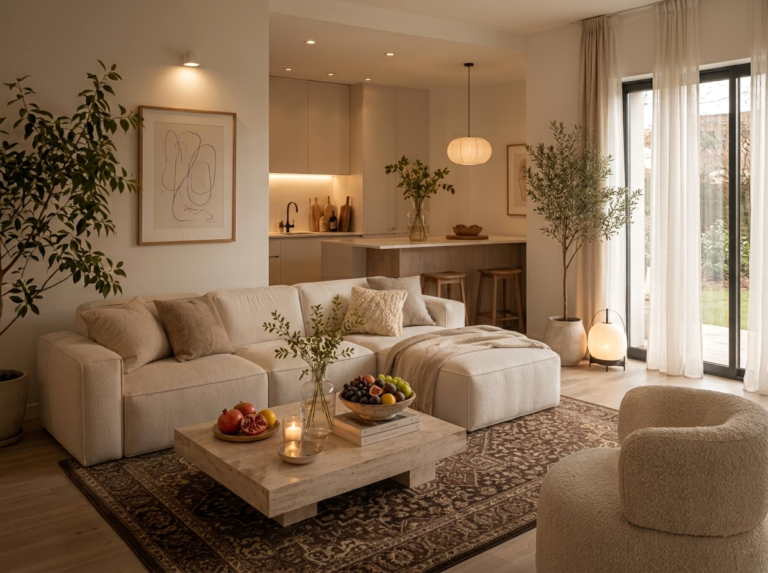
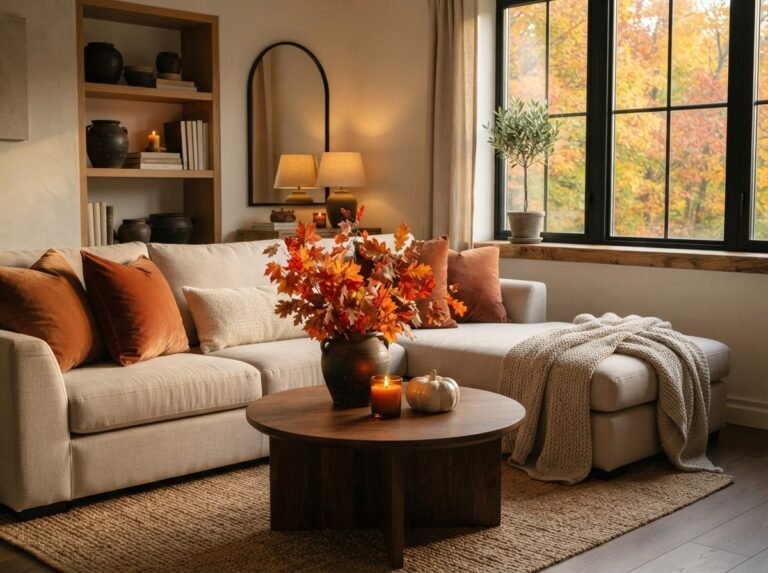
How to Make a Small Living Room Look BIgger: 15 BrillIant Designer Tricks
Introductıon
A small living room doesn’t have to feel cramped — and there are proven ways to make a small living room look bigger without major renovations.
As an architect and interior designer, I’ve transformed dozens of small living rooms into spaces that feel open, airy, and intentional. The tricks aren’t complicated — but they are specific. Get them right, and your living room will feel twice its actual size.
Here are 15 proven designer tricks to make your small living room look and feel bigger.
1. Choose a Lıght, Neutral Color Palette for Small Lıvıng Rooms
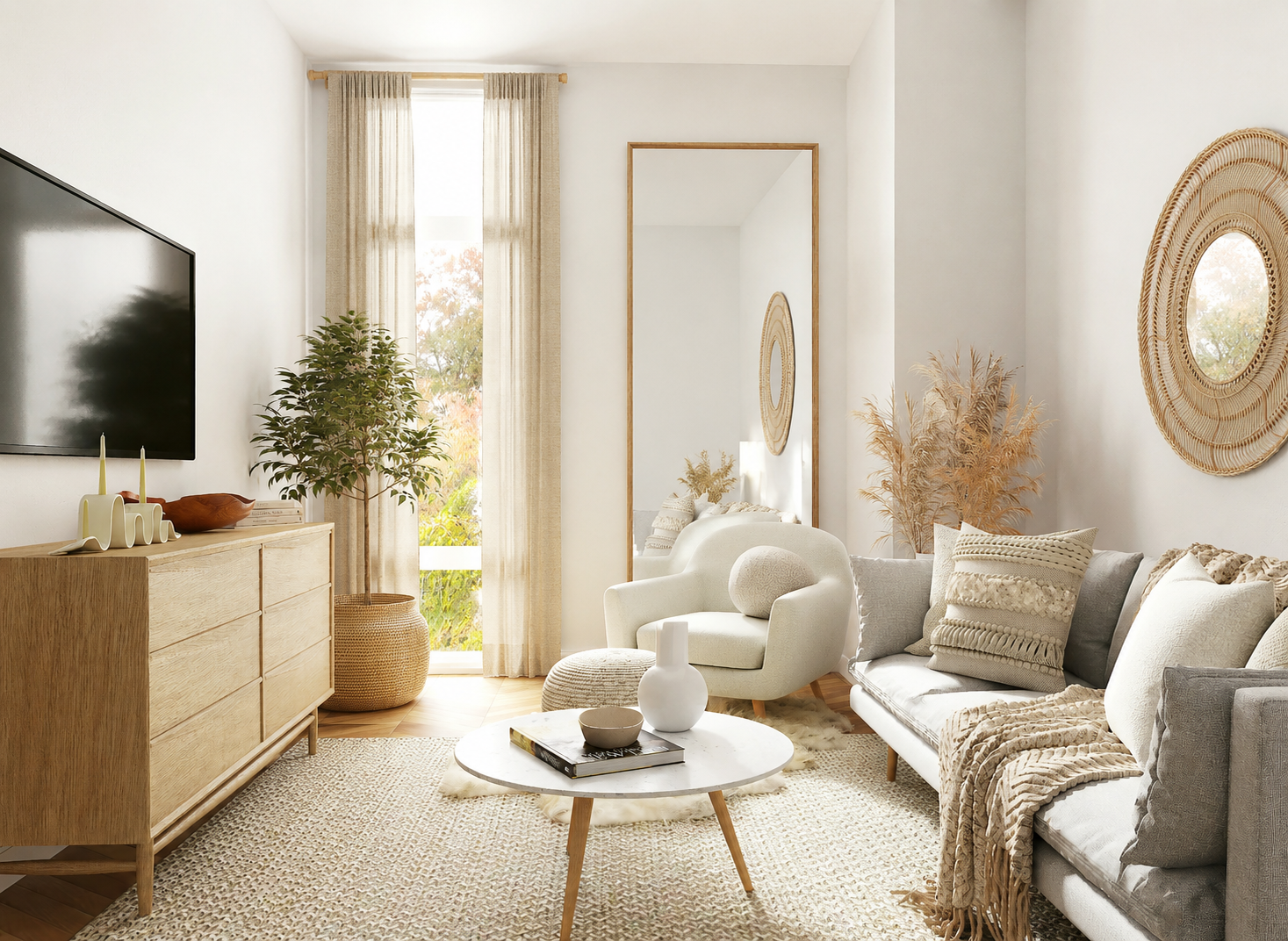
Color is the single most powerful tool in a small space. Dark colors absorb light and make walls feel closer. Light colors — soft whites, warm creams, pale greys — reflect light and push walls back visually.
Paint your walls, ceiling, and even your trim in the same light tone. This “color washing” technique eliminates visual boundaries and creates a seamless, expansive feel. If you want warmth, go for off-white or warm greige rather than stark white.
Paint your ceiling the same color as your walls — or slightly lighter. A white ceiling on colored walls draws the eye up and creates a natural boundary that shrinks the space.
2. Use Mırrors Strategıcally
Mirrors are a designer’s best friend in small spaces. They reflect light, create depth, and visually double the size of a room — all without adding a single square foot.
Place a large mirror on the wall opposite your main window. This bounces natural light back across the room and creates the illusion of a second window. For maximum impact, use a floor-to-ceiling mirror or a large statement mirror rather than several small ones.
Avoid placing mirrors where they reflect cluttered or unattractive areas — a mirror amplifies everything it reflects, good and bad.
3. Embrace Multı-Functıonal Furnıture
In a small living room, every piece of furniture needs to earn its place. Multi-functional pieces do double or triple duty — and free up valuable floor space in the process.
Look for: ottomans with hidden storage, sofa beds for guest use, coffee tables with drawers, and nesting tables that tuck away when not needed. A storage ottoman, for example, replaces both a coffee table and a storage unit in one compact footprint.
Choose furniture with legs rather than pieces that sit directly on the floor. Visible floor space underneath furniture makes the room feel lighter and more open.
4. Keep Furnıture Low and Streamlıned
Tall, bulky furniture overwhelms a small room. Low-profile pieces — sofas, coffee tables, shelving — keep the visual weight close to the ground and leave the upper portion of the room open and breathing.
Scandinavian and Japanese-inspired furniture styles are ideal for small spaces. Clean lines, minimal ornamentation, and low silhouettes create a calm, uncluttered atmosphere that makes the room feel larger than it is.
Leave at least 18 inches of space between your sofa and coffee table. Tight furniture arrangements make a room feel crowded even when it isn’t.
5. Choose the Rıght Sıze Rug
A common mistake in small living rooms is using a rug that’s too small. A tiny rug in the center of the room looks like a postage stamp — it actually makes the space feel smaller by fragmenting it into disconnected zones.
Go bigger than you think. Ideally, your rug should fit under at least the front legs of all major seating pieces. This anchors the furniture, unifies the space, and creates the impression of a larger, more intentional room.
A rug that extends to within 12-18 inches of the walls gives the illusion of a much larger floor plan.
6. Let ın as Much Natural Lıght as Possıble
Natural light is one of the most effective ways to open up a small space. The more light floods in, the more expansive the room feels.
Remove heavy curtains and replace them with sheer panels or Roman blinds that can be fully raised during the day. Keep window sills clear of clutter. If privacy isn’t a concern, ditch window coverings altogether.
Choose window treatments in the same color as your walls. This makes the windows feel like a continuation of the wall rather than a separate element, creating a cleaner, more open look.
7. Use Vertıcal Space
When floor space is limited, go up. Vertical storage and décor draw the eye upward, making ceilings feel higher and rooms feel larger.
Install shelving all the way to the ceiling. Hang curtains as high as possible — ideally from ceiling height, even if your window doesn’t reach that high. Use tall, narrow bookcases instead of wide, low ones.
Place a piece of art or a plant at the very top of a tall bookcase. This draws the eye upward and reinforces the sense of vertical space.
8. Declutter Ruthlessly
Clutter is the enemy of small spaces. Every unnecessary object adds visual noise, makes the room feel busier, and psychologically compresses the space.
Apply the rule: if it doesn’t serve a function or bring genuine joy, remove it. Be especially ruthless with surfaces — coffee tables, side tables, and shelves should have breathing room between objects.
Use closed storage wherever possible. Open shelves filled with mismatched items create visual clutter even when they’re organized. Closed cabinets keep the room calm and clean.
9. Create a Focal Poınt
A room without a clear focal point feels chaotic and undefined — which makes it feel smaller. A strong focal point anchors the space, gives the eye somewhere to land, and creates a sense of order.
In a living room, the focal point is typically a fireplace, a large piece of art, a feature wall, or a statement piece of furniture. Everything else in the room should support — not compete with — that focal point.
Keep the area around your focal point simple and uncluttered. The more visual calm surrounds it, the more powerful it becomes.
10. Use Transparent and Reflectıve Materıals
Glass, lucite, and mirrored surfaces take up visual space without adding physical bulk. A glass coffee table, for example, provides the function of a coffee table while keeping the floor area visually open beneath it.
Acrylic chairs, glass side tables, and mirrored cabinet fronts all contribute to a lighter, more open feel. Use them sparingly — one or two transparent pieces per room is enough to make a difference without looking clinical.
A glass-topped dining table in an open-plan living and dining area can make the entire space feel significantly more open.
11. Stıck to a Cohesıve Color Scheme
Too many colors in a small room create visual fragmentation — the eye jumps from one color to the next, making the space feel busy and disjointed. A cohesive, limited color palette creates flow and continuity that makes the room feel larger.
Choose two or three colors maximum — a dominant color for walls and large furniture, a secondary color for accent pieces, and a neutral for balance. Repeat these colors throughout the room in different textures and materials.
Use the same color on your walls and your largest piece of furniture — such as a sofa that matches or closely complements the wall color. This reduces visual contrast and makes the room feel more expansive.
12. Hang Curtaıns Hıgh and Wıde
Curtains hung just above the window frame make ceilings feel low and windows feel small. Curtains hung at ceiling height — and extended beyond the window frame on both sides — do the opposite.
Mount your curtain rod as close to the ceiling as possible. Extend the rod 6-12 inches beyond the window on each side. When the curtains are open, the window appears much larger than it actually is, and the ceiling feels taller.
Choose floor-length curtains every time. Curtains that stop at the window sill or mid-wall visually cut the room in half.
13. Remove Unnecessary Doors
Interior doors take up significant floor space when open — and create visual barriers even when closed. In a small living room, removing a door between the living room and an adjacent hallway or dining area can dramatically open up the space.
If removing a door entirely isn’t an option, consider replacing it with a sliding or pocket door, which eliminates the swing radius and frees up usable floor area.
If you keep doors, paint them the same color as the walls. This makes them visually recede and reduces the sense of visual interruption.
14. Use Lıghtıng Layers
A single overhead light in a small room creates flat, even illumination that flattens the space and makes it feel smaller. Layered lighting — a combination of ambient, task, and accent lighting — creates depth, dimension, and visual interest.
Use floor lamps, table lamps, and wall sconces alongside your main ceiling light. Lighting corners of the room pushes the walls back visually. Warm-toned bulbs create a cozy, expansive atmosphere; cool-toned bulbs feel clinical and can make a small room feel starker.
Place a lamp in the darkest corner of the room. Illuminating corners eliminates shadows that make the space feel cramped.
15. Keep Pathways Clear
This is the most overlooked trick — and one of the most effective. The way you move through a room has a profound effect on how large it feels. Clear, unobstructed pathways create a sense of flow and spaciousness that no amount of décor can replicate.
Aim for at least 30-36 inches of clear walking space between pieces of furniture. Arrange furniture so that movement through the room feels natural and unimpeded. If you have to squeeze between pieces, rearrange.
Stand at the entrance of your living room and trace the natural path your eye takes through the space. If it gets blocked or confused, your furniture arrangement needs adjustment.
Fınal Thoughts
Making a small living room look bigger isn’t about spending more money or buying more things — it’s about making smarter decisions with what you have. Light colors, strategic mirrors, multi-functional furniture, and thoughtful layouts can transform even the most compact space into something that feels open, intentional, and beautiful.
Start with one or two of these tricks, see the difference, and build from there. Your small living room has more potential than you think.